
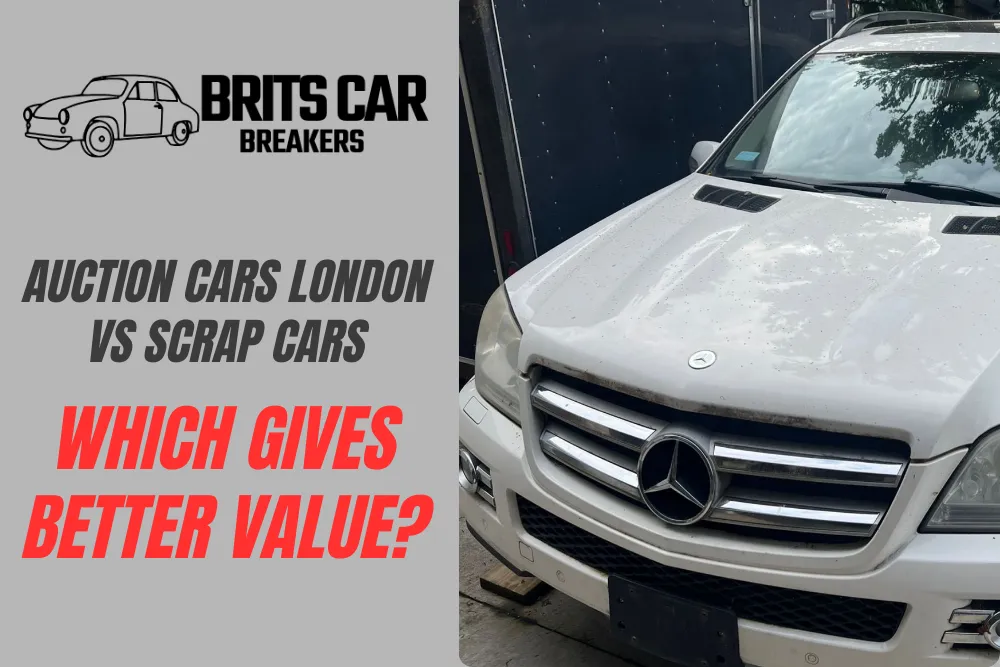
Deciding what to do with a car that has seen better days is a significant headache for many Londoners. You might have an old, reliable vehicle that finally gave up the ghost or a damaged vehicle taking up precious driveway space in a city where space is gold. The big question is always about the money: do you put it through an auction and hope for a bidding war, or do you take the guaranteed route and scrap it?
This choice matters because the difference in your pocket can be hundreds of pounds. Currently, with shifting metal markets and new ULEZ pressures, the correct answer has changed. This guide breaks down the real value of both paths so you can stop guessing and start getting the most for your motor.
What Determines the Value of Auction Cars in London?
A few key factors drive the value here:
- The ULEZ Factor: In 2026, buyers are hyper-focused on compliance. A non-compliant car might struggle to get bids even if it runs perfectly.
- The “Story”: A thick folder of service history receipts suggests the car was well cared for, giving bidders the confidence to push the price higher.
- Model Popularity: Rare models or popular first cars like a Ford Fiesta or a Vauxhall Corsa, often see the hammer fall on a figure much higher than the metal weight.
Understanding Scrap Car Value and Metal Prices
The value is tied directly to the physical weight and the current state of the global metal market.
- Base Steel Prices: In early 2026, scrap metal prices for vehicle shells are hovering around £120-£130 per tonne.
- Component Value: Your car contains a cocktail of materials. High-value components, such as alloy rims, can fetch up to £1,000 per tonne on their own.
- Precious Metals: The catalytic converter contains platinum and palladium, which are worth more than the car’s frame.
- Predictability: You get a quote based on your vehicle’s weight, and that is what you’re paid. There is no waiting for a bidder to show up.
The Hidden Costs: Car Auction Fees Explained
One thing many people forget when dreaming of a high auction price is the “haircut” the auction house takes. Selling a car at auction is never free.
Fee Type |
Average Cost in London |
| Entry Fee | £25 to £50 per listing |
| Seller’s Commission | 8% to 10% of the hammer price |
| Towing/Transport | £60 to £150 (if non-runner) |
| Storage Fees | £10 to £20 per day (if it doesn’t sell) |
By the time you add up these costs, a £800 sale might only leave you with £600 in your hand. It is vital to do this math before you commit.
Selling a Damaged Car: When is Auction Better?
If your car has been in an accident but isn’t a total write-off, you are standing at a crossroads. Selling a damaged car at auction is a good move only if the damage is “bolt-on.”
- Auction-Worthy Damage: Dented doors, hanging bumpers, or cracked lights. Mechanics can fix these cheaply and resell the car for a profit.
- Scrap-Worthy Damage: Structural chassis damage, deployed airbags, or a flooded engine. These issues scare off auction buyers, making the scrap route much more profitable for you.
Why London Car Recycling is Getting More Popular
Londoners are increasingly choosing recycling over traditional selling methods because the process has become incredibly streamlined.
- Clean Break: With 2026 environmental regulations being stricter than ever, many people want a clean break from an old vehicle.
- The CoD: You get a Certificate of Destruction, which is your proof to the DVLA that you are no longer responsible for taxes or fines.
- Zero Logistics: Most modern recycling services offer free scrap car removal, which is a massive win in London, where moving a broken car through traffic is a nightmare.
Making the Final Choice: Auction vs Scrap Car
To decide which gives better value, you need to be honest about your car’s condition. You can use this simple checklist to choose:
Go for the Auction if:
- The vehicle is less than 10 years old.
- It has under 100,000 miles and a full service history.
- It is ULEZ-compliant and starts every time.
Go for the Scrapyard if:
- The car is 15+ years old or has a major mechanical fault.
- The repair bill is more than 50% of the car’s market value.
- You need the money immediately and don’t want to risk auction fees.
Conclusion
Choosing between an auction and a scrapyard comes down to the balance of effort and reward. Auctions can offer a higher ceiling for cars that still have life in them, but the fees and uncertainty can eat into your profits. Scrapping provides a fast, guaranteed, and transparent way to get paid for your vehicle’s raw materials.
If you want a service that is straightforward and respects your time, companies like Brits Car Breakers make the process easy by handling the heavy lifting. Ultimately, if your car is more of a burden than a blessing, taking the scrap route is often the most innovative way to put cash back in your pocket without the London stress.
Frequently Asked Questions
What is the difference between auction cars and scrap cars in London?
Auction cars are sold to buyers who may repair or resell them, often fetching higher prices if the vehicle is still usable. Scrap cars are valued based on weight and materials, offering a fixed and guaranteed payout.
Which option pays more: auctioning a car or scrapping it?
Auctioning can sometimes bring higher returns, especially for newer, roadworthy vehicles. However, scrap cars provide a predictable price without fees or uncertainty, making them a safer option for older or damaged vehicles.
When should I choose auction over scrapping my car?
You should consider an auction if your car is under 10 years old, has low mileage, runs well, and meets emission standards like ULEZ compliance. These factors attract better bids from buyers.
When is scrapping a car the better option in London?
Scrapping is ideal if your car has major mechanical issues, structural damage, or high repair costs. It’s also better if you want quick payment without dealing with auction fees or delays.
Are there hidden costs when selling a car at auction?
Yes, auctions often include entry fees, seller commissions, transport, and storage charges. These costs can significantly reduce your final payout compared to scrapping.