
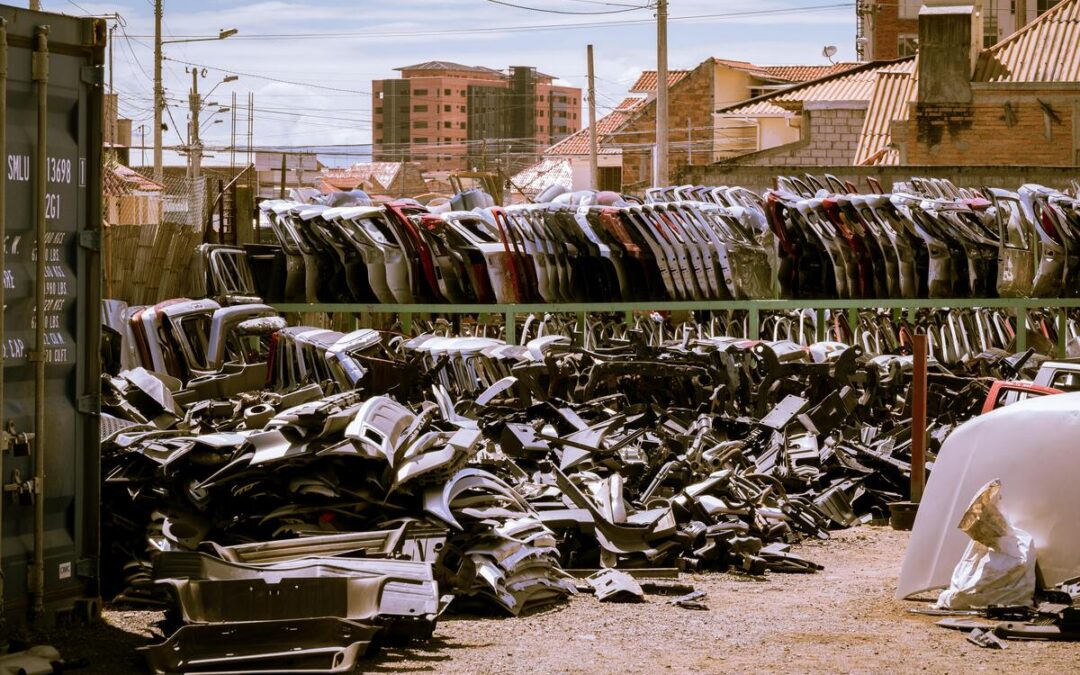
Understanding how mileage influences the price helps you set the right expectations and ensures you do not get lowballed by a buyer. This guide dives deep into the relationship between your odometer and the cash in your pocket. We will look at why some high-mileage cars still fetch a premium while others are priced strictly by their weight.
How Scrap Yards Actually Price a Car
Before jumping into mileage, it helps to know what scrap yards are really looking at when they make you an offer.
Most scrap yards in the UK and beyond work on two main things:
- The weight of the car, because scrap metal is priced by the tonne
- The condition and usability of parts, because salvageable components add extra value on top of the base metal price
That second part is where mileage starts to matter. A car is not just a lump of steel to a good scrap yard. It is a collection of parts, including the engine, gearbox, alternator, catalytic converter, doors, and lights. If those parts are still in decent shape, they can be sold on. If they are worn down from years of heavy use, they lose that secondary value.
Does High Mileage Actually Lower Your Scrap Price?
Yes, sometimes high mileage lowers your scrap price. But maybe not in the way you expect. Here is the honest breakdown:
When High Mileage Hurts the Scrap Value
- Engine and gearbox wear mean the yard cannot resell those parts with any confidence
- Worn suspension and brakes drop off the usable parts list
- High mileage often comes with more repairs, meaning the car has already had cheaper replacement parts fitted, which reduces part value further
- Buyers for used parts want low-risk components, and a 180,000-mile engine is a harder sell
When High Mileage Does Not Really Matter
Here is where it gets interesting. If your car is going purely for metal, the mileage is almost irrelevant. Scrap metal prices fluctuate based on the global market, and your car weighs what it weighs regardless of whether it did 40,000 miles or 400,000 miles.
A heavier car with high mileage will often fetch more than a lighter car with low mileage because the metal weight wins.
The Real Factors That Set Your Scrap Price
Mileage is just one piece. Here is what actually drives the number a scrap yard offers you:
Factor |
Impact on Price |
| Vehicle weight | High impact, base of all scrap pricing |
| Current scrap metal rates | High impact, changes weekly |
| Working catalytic converter | High impact, precious metals inside |
| Condition of the engine and gearbox | Medium to high impact |
| Age of the vehicle | Medium impact |
| Make and model | Medium impact, some parts in higher demand |
| Mileage | Low to medium impact, depending on part condition |
| Location | Low to medium impact, affects collection cost |
Low Mileage Car Going to Scrap? Here Is What That Means
A low-mileage car heading to a scrap yard sounds strange but it happens. Flood damage, fire damage, chassis damage from an accident, or just a car that sat unused for years and seized up completely. These cars can have very low odometer readings but still end up worthless from a mechanical standpoint.
In these cases, the scrap yard will still look at what parts survived. If the engine has low miles but got water damaged, it is not worth much. If the body panels are clean and unrusted, those might still have good resale value as second hand parts.
What You Can Do to Maximise Your Scrap Offer
Regardless of mileage, here are practical steps that actually move the needle:
- Get multiple quotes. Prices vary quite a bit between yards. Spend 20 minutes calling around or using online quote tools.
- Mention working parts upfront. If your engine runs, say so. If you have new tyres recently fitted, mention that too.
- Do not remove parts yourself. Some people strip out the stereo or battery thinking they are saving value. Often this just reduces what a yard will offer since they factor in missing components.
- Check current scrap metal prices. They move with the market. If prices are up, it is a better week to scrap.
- Be honest about the car’s condition. Trying to hide rust, damage, or mechanical failure tends to backfire when the yard inspects it.
Does a Non Running Car Lose Value Because of Mileage?
This is a common worry. If the car will not start, people assume it is almost worthless.
The truth is a non runner is assessed differently. The yard knows it cannot be driven so they focus almost entirely on:
- Weight
- Scrap metal value at current rates
- Any parts that can be salvaged
Conclusion
Mileage affects scrap car value but it is one factor among many, not the main one. What really matters is the current price of scrap metal, the weight of your car, and whether usable parts can be salvaged. High mileage can reduce part value but it will not kill your offer completely, especially if the car is heavy or has a working catalytic converter.
If you are ready to scrap your car and want a straightforward and fair process, Brits Car Breakers is a solid option worth looking at. We assess cars honestly and make the whole thing simple from the first quote to collection.
Does high mileage reduce scrap car value?
High mileage can reduce the value of reusable parts like the engine and gearbox, but the vehicle’s weight and metal value still play a major role.
Is mileage important when scrapping a non-running car?
Not always. For non-running vehicles, scrap yards mainly focus on metal weight, catalytic converter value, and salvageable parts.
Can a low-mileage car still have low scrap value?
Yes. Accident damage, flooding, rust, or mechanical failure can lower the value even if the car has low mileage.
What factors matter most in scrap car pricing?
Vehicle weight, current scrap metal prices, catalytic converter condition, and reusable components usually matter more than mileage.
How can I get the best scrap car price?
Compare multiple quotes, mention working parts, keep the car complete, and check current scrap metal rates before selling.