
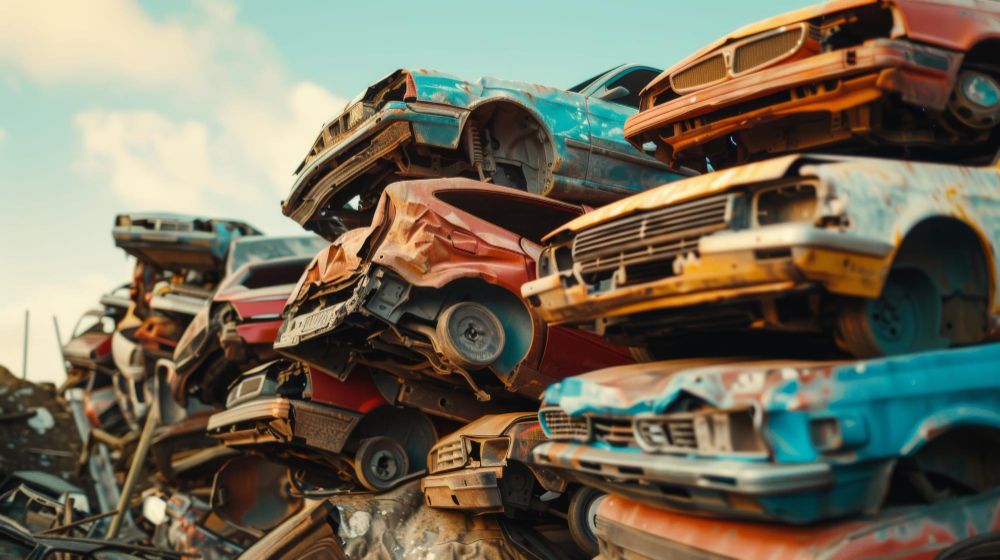
Every classic car owner eventually asks the same question while staring at a dusty project sitting in the garage: is it time to restore this, or time to let it go? Getting the answer wrong can cost thousands of pounds — either by pouring money into a car that will never earn it back, or by scrapping a genuinely valuable vehicle too soon. Some classics deserve every penny spent on them. Others will quietly drain your bank account with nothing to show for it.
This guide walks through how to tell the difference, what restoration really costs, the warning signs that scrapping makes more financial sense, and what to do once you’ve decided.
How Do You Know If Your Classic Car Is Worth Restoring?
A classic car is generally worth restoring if it has:
- Historic or rare value — limited production runs, notable racing history, or cultural significance
- An intact body and chassis with only minimal surface rust
- Available parts, either OEM, reproduction, or from active enthusiast communities
- High sentimental or family value, which can justify spending beyond pure market logic
On the other hand, if the chassis has extensive structural damage, parts are nearly impossible to source, or the model simply isn’t collectable, restoration costs can quickly outstrip what the finished car would ever be worth.
Classic Car Restoration Cost: What You’re Really Signing Up For
Restoration costs add up fast, and they typically break down as follows:
- Body and rust repair — usually the single largest expense
- Engine restoration or replacement parts
- Interior repairs — seats, dashboards, trim, and carpeting
- Professional paintwork, including primer and lacquer stages
- Rewiring, especially critical on older models with degraded looms
- Labour costs from a reputable restoration shop, which can be substantial
A full restoration on an average classic can easily run past £15,000–£20,000 depending on condition, and owners of higher-end European classics have reported paying more than double that figure. Before committing, get quotes from at least two shops so you know the real number, not an estimate.
Signs Your Old Car Should Be Scrapped Instead
Sometimes a car simply isn’t salvageable — and that’s a perfectly reasonable outcome. Watch for these warning signs:
- Rust in the frame that compromises structural safety
- A cracked engine block that can’t be economically repaired
- Discontinued parts that are no longer available for the model
- Repair costs that greatly exceed the car’s realistic value
- Water damage from prolonged outdoor storage or flooding
If two or more of these apply, restoration is very likely a losing bet financially. There’s no shame in retiring a car whose time has genuinely come — and doing so responsibly, through a licensed facility, is both legal and better for the environment than letting it rot.
Restoration vs. Scrapping: Quick Comparison
Factor |
Restoration Makes Sense |
Scrapping Makes Sense |
| Frame condition | Solid, minor rust only | Rusted through, unsafe |
| Parts availability | Easy to find | Discontinued or rare |
| Market demand | High collector interest | Low or no demand |
| Repair cost vs. value | Cost is reasonable | Cost far exceeds value |
| Sentimental value | Strong personal connection | None, just taking up space |
What Happens to the Value After Restoration?
Not every restoration pays for itself. Sought-after models — a Mustang Fastback, an old Jaguar E-Type, or other recognised classics — typically appreciate meaningfully once properly restored. A standard 1970s sedan, however, usually won’t fetch a comparable premium, simply because collector demand isn’t there. Before you commit to restoration, check recent sale prices for your exact make and model on classic car auction sites so you’re working from real numbers, not hope.
When Scrapping Actually Makes More Sense
If your car needs a new engine, a new frame, and a full interior overhaul, you’re not really restoring the original car anymore — you’re building a new one inside an old shell. At that point, the more sensible financial move is usually to scrap it. You’ll still get paid fairly for the metal and any reusable parts, and a licensed scrap car service will typically tow the vehicle away at no cost to you.
If you’re in London, Brits Car Breakers is a licensed Authorised Treatment Facility (ATF) offering free same-day collection, an instant online quote, and payment on collection — with your DVLA Certificate of Destruction issued within 7 days. That covers North, East, South, West, and Central London, including areas like Bethnal Green, Hackney, Stratford, Barking, Croydon, Wembley, Ilford, and Enfield.
Things to Check Before You Decide
Before making a final call, walk around the car and work through this checklist:
- Have a mechanic inspect the frame and underside for hidden structural damage.
- Confirm the VIN matches the documentation — this affects both value and legality of sale.
- Find out how many units of this model are still registered to gauge rarity.
- Check what comparable cars have sold for at a local classic car club or auction.
- Get quotes from at least two restoration shops before committing to any work.
Taking these steps up front can save you from a decision you’ll regret six months and several thousand pounds later.
Conclusion
Classic car restoration is genuinely exciting, but it rewards a clear-headed look at the numbers more than an emotional attachment to the car. Assess its condition, price out the real costs, establish its true market value, and then decide. Not every car needs to be brought back to life — and if yours doesn’t, Brits Car Breakers offers a straightforward, licensed way to sell it for scrap and get paid the same day, anywhere in London.
Frequently Asked Questions
Is it ever worth restoring a classic car with a rusted frame?
Only if the rust is limited and repairable by a qualified bodywork shop. If rust has compromised structural integrity throughout the frame, most owners find it’s cheaper and safer to scrap the car rather than attempt a full frame rebuild.
How much does it cost to restore a classic car in the UK?
A full restoration typically starts around £15,000–£20,000 for an average classic, and can exceed £40,000 for rarer European models, depending on the extent of bodywork, engine, and interior repairs needed.
What's the difference between a scrapyard and a car breaker for an old classic?
A scrapyard processes vehicles primarily for scrap metal weight, while a licensed car breaker like Brits Car Breakers also recovers reusable parts and handles depollution and DVLA paperwork as part of a fully compliant recycling process.
Can I scrap a classic car that's non-running or has failed its MOT?
Yes. Licensed scrap car services collect vehicles in any condition, including non-runners and MOT failures, and still pay based on the car’s weight, metal value, and any usable parts.
Do I get paid on the same day if I scrap my classic car in London?
Reputable licensed ATFs, including Brits Car Breakers, offer instant online quotes and same-day payment via secure bank transfer once the car is collected, with no hidden deductions.
Will I still get a Certificate of Destruction if my car is a classic model?
Yes — any vehicle scrapped through a licensed Authorised Treatment Facility receives a DVLA Certificate of Destruction, regardless of the car’s age or classic status, typically issued within 7 days.