
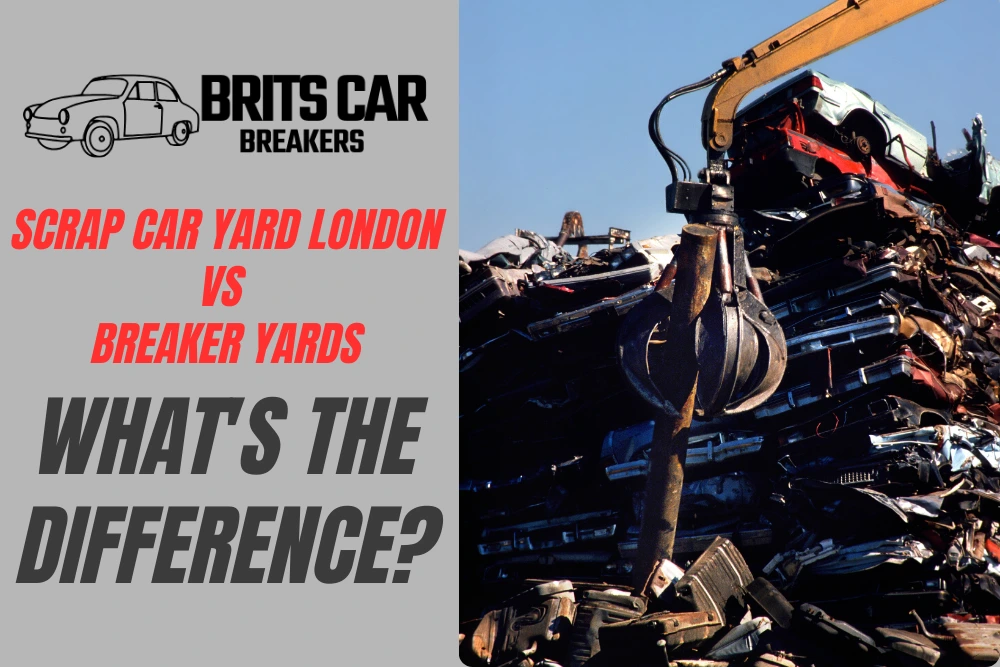
Some places call themselves scrap yards. Others advertise as breaker yards. Most people think these are just two names for the same thing. They are not. The difference matters because it affects your wallet. It also changes what happens to your car after you walk away. Choosing the wrong one means you might lose money or harm the environment. This guide clears up the confusion so you can make the right move for your car and your bank balance.
First, let’s examine what Actually Happens at a Scrap Car Yard?
A scrap yard looks at your car and sees raw metal. They do not care about the brand or the features. To them, your vehicle is simply a large pile of steel, aluminium, and copper waiting to be processed. The workflow here is fast and strict. When a car arrives, the team gets to work immediately. They drain all the fluids first. Oil, fuel, and brake fluid must come out to keep the site safe and clean.
Once the car is dry, the heavy machinery takes over. A crusher compresses the vehicle into a dense cube. Sometimes a shredder rips it into tiny fragments. The separated metals move to sorting stations where magnets pull out the iron and steel while other systems extract the aluminium. All these materials go straight to a refinery to become new metal products. When you choose a scrap yard, you are selling the weight of the metal. The price follows the global market for scrap steel. If metal prices are down, the offer for your car goes down too.
How Do Car Breaker Yards Operate?
In contrast, breaker yards work on a totally different logic. They value the precision engineering inside the car rather than the metal shell. A breaker yard is a warehouse for parts that still have life in them. They employ mechanics who know exactly what to look for. These experts carefully take the car apart. They want the engine, the gearbox, the doors, and the electronics.
These places feed the market for used car parts. When a car rolls in, they inspect it to see what can be saved. This takes time and skill. They have to test the parts and catalogue them for future buyers. Once they strip everything good, only the empty shell goes to the crusher. Because they can sell a single headlight or alternator for a good price, they can often pay you more for the whole car. This is very common with newer cars or popular models, where spare parts are hard to find.
Scrap Car Yard London vs Breaker Yards: The Main Differences
Feature |
Scrap Car Yard (London) |
Breaker Yard (London) |
| Main Focus | Recycling raw metal (Steel/Iron) | Reselling working car parts |
| How You Get Paid | By Weight: Fixed price per tonne | By Value: Price depends on demand for parts |
| Best For | Old cars, MOT failures, total wrecks | Newer cars, accident-damaged, specific models |
| Vehicle Fate | Crushed, shredded, and melted down | Dismantled carefully to save components |
| Process Speed | Fast (Drop off and crush) | Slower (Inspection and dismantling) |
| Eco Benefit | Reduces the need for new metal mining | Reduces waste by reusing existing parts |
Which Option Pays More for Your Vehicle?
Your wallet is likely the biggest factor in this decision. If your car is a total wreck, scrap it. If it is rusted through, ancient, or completely non-functional, a scrap yard is the right choice. Old cars often have little value beyond their weight. The pricing here is simple math. You get a set rate per tonne. It is quick and easy.
However, if your car is newer or just has one major fault, do not scrap it yet. Car breakers, London-based companies, might offer you much more. They know what local mechanics need. If you have a car with a sought-after gearbox, they will pay for that potential profit. Sell my car for scrap is a broad search term, but you need to narrow it down. If you think your car has value in its parts, tell the buyer. Describe the condition honestly. You might be surprised by the difference in the quote.
Why You Must Use an Authorised Treatment Facility
You must be careful about who you sell to. It does not matter if you pick a scrap yard or a breaker. The facility must be an Authorised Treatment Facility (ATF). This is the only legal way to dispose of a car in the UK. The Environment Agency licenses these sites to handle hazardous waste.
Cars are full of dangerous materials. Lead acid batteries, explosive airbags, and toxic oils need special handling. Illegal sites often ignore these rules. They take the valuable bits and dump the rest. If they dump a car that is still registered to you, the police will come knocking at your door. You could face fines for their mess. An ATF follows strict rules to depollute end-of-life vehicles safely. Always ask for their license number before you agree to anything.
The Importance of the Certificate of Destruction
The paperwork protects you. When you hand your keys to an ATF, demand a Certificate of Destruction (CoD). This document comes from the DVLA. It is the only official proof that you are no longer responsible for the vehicle.
A receipt from the driver is not enough. A handwritten note is useless. Without a CoD, the DVLA thinks you still own the car. You will still be liable for road tax. You will get fines for not having insurance. Legitimate yards connect directly to the DVLA system. They can trigger the certificate instantly. It usually arrives in your email inbox or by post. This piece of paper is your safety net. It proves the car has been destroyed, and you are free of it.
How to Decide: Scrap It or Break It?
You can make this choice by looking at your car objectively. Is it under ten years old? Does the engine start? Is the bodywork mostly straight? If you say yes, try a breaker yard first. The parts are likely worth more than the scrap metal rate.
If the car is very old, stick to scrapping. If it has failed the MOT on rust and emissions, scrap it. If it has been sitting in a garden for five years, scrap it. Vehicle recycling at a scrap yard is the most efficient path for these cars. The cost of labour to strip an old car is too high. The breaker yard won’t want it. The scrap yard will take it gladly. You get a fair price for the meta, and the problem is solved instantly.
Ensuring a Smooth Collection Process
Once you pick a service, the rest should be easy. Good companies in London will come to you. You should not pay for a tow truck. A professional scrap car removal team handles the logistics. They will send a truck to your house or work.
Get your papers ready before they show up. You need the V5C logbook and your ID. Clear out your stuff. Check the boot and the glovebox. People leave all sorts of things in old cars. The driver will check your ID and the car VIN. They will help you fill out the yellow slip on the V5C. You send that to the DVLA. Remember, cash payments for scrap cars are illegal. The driver will arrange a bank transfer. It is safer and creates a proper paper trail.
Conclusion
The choice between a scrap yard and a breaker yard depends on what your car has left to give. Scrap yards are the best exit route for cars that are truly finished. They turn old metal into new resources efficiently. Breaker yards find value in the parts that still work. They keep other cars off the road and reduce waste. Both options help keep London clear of abandoned vehicles.
For most people, the best bet is a service that handles both sides. Companies like Brits Car Breakers offer the best of both worlds. They are fully licensed and know how to extract the maximum value from every vehicle. They handle the legal paperwork and the environmental side perfectly. You get a fair price and the certainty that your car is gone for good. Choose the right partner and the process will be simple, legal, and profitable.
Should I buy used or new car parts in London?
Used car parts are a cost-effective option for many repairs, while new parts may suit customers looking for brand-new replacements with manufacturer warranties.
Are used car parts suitable for everyday London driving?
Yes, quality-tested OEM used parts from Brits Car Breakers are commonly used for daily commuting and city driving across London.
Which car parts are best purchased used?
Many customers buy used doors, mirrors, wheels, headlights, bumpers, and selected mechanical parts to save money on repairs.
Why do garages recommend OEM used parts?
OEM used parts generally fit better and maintain original vehicle specifications, making them a preferred choice for many London garages.
Can used parts help repair MOT-failed vehicles?
Yes, affordable used parts from Brits Car Breakers can help repair MOT failures without overspending on older vehicles.