
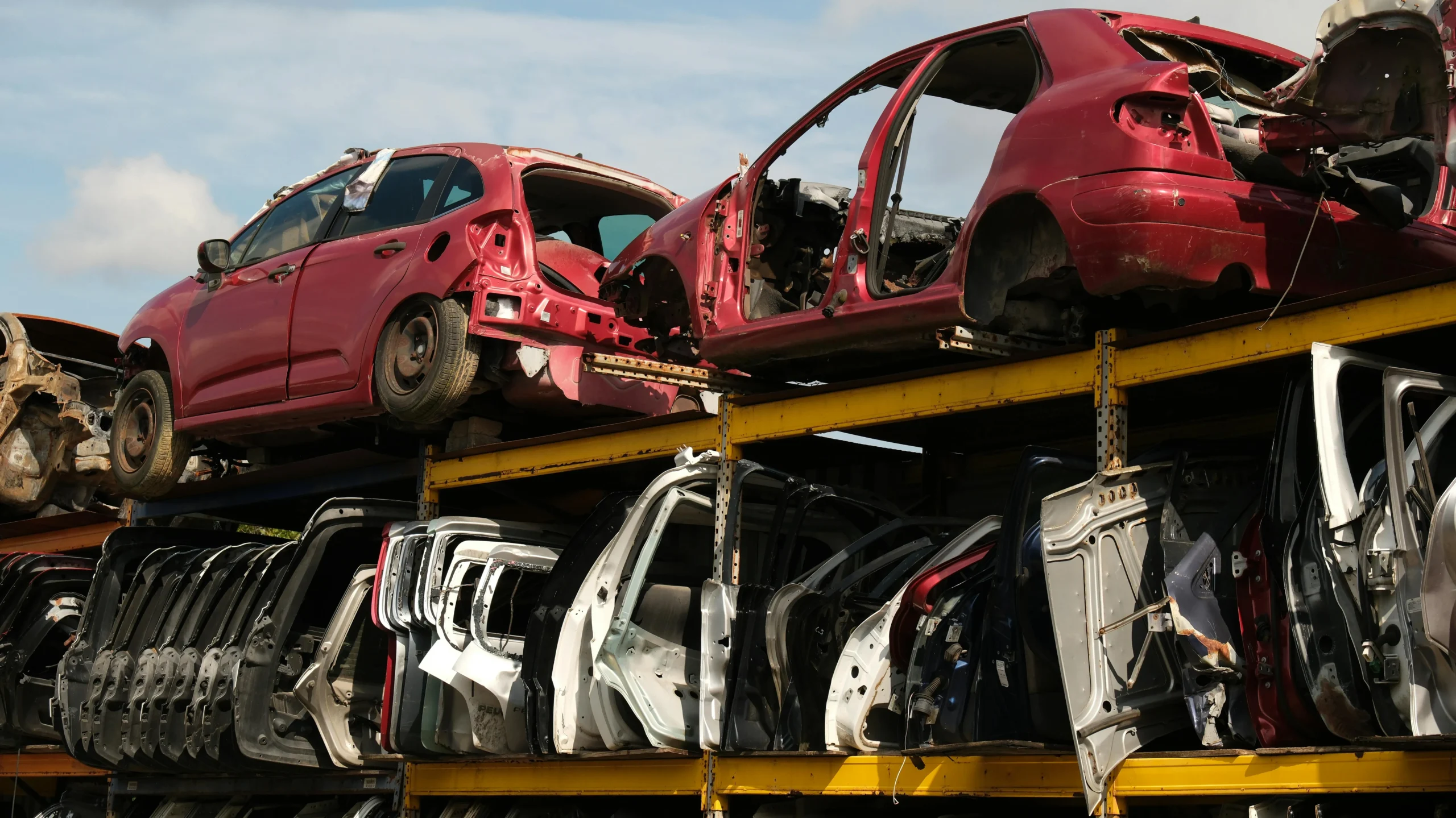
Quick answer: MIAFTR stands for the Motor Insurers’ Anti-Fraud and Theft Register. It was the MIB database containing records of insurance claims involving written-off or stolen vehicles. MIB now refers to this data as Vehicle Salvage & Theft Data (VS&TD). It helps support vehicle provenance, insurance processes and fraud prevention. If you are scrapping a written-off or damaged car, understanding its recorded history helps you follow the correct disposal and DVLA process.
What Does MIAFTR Stand For?
MIAFTR stands for Motor Insurers’ Anti-Fraud and Theft Register.
The register was managed by the Motor Insurers’ Bureau (MIB) and contained records of insurance claims that resulted in a vehicle being written off or stolen. MIB’s current documentation refers to this information as Vehicle Salvage & Theft Data (VS&TD), previously known as MIAFTR.
The purpose of this information is to help organisations identify relevant vehicle history, support insurance activity and reduce opportunities for fraud.
For vehicle owners, the important point is simple: a vehicle can have an insurance write-off or theft record even after it has changed hands or been repaired.
Why Does MIAFTR Matter When Scrapping a Car?
MIAFTR matters because a vehicle’s insurance and salvage history does not simply disappear when the vehicle is sold, repaired or eventually scrapped.
A written-off vehicle can have a significant history attached to it. Depending on the circumstances and its insurance write-off category, it may be:
- permanently unsuitable for road use
- suitable for parts recovery
- repairable and potentially returnable to the road
- damaged but still valuable as a salvage vehicle
Keeping accurate vehicle-history information helps distinguish between vehicles that can legally return to the road and those that must be disposed of.
However, MIAFTR and DVLA perform different roles. MIAFTR/VS&TD concerns insurance and salvage/theft data, while DVLA handles vehicle registration, licensing and keeper records. When a vehicle is written off or scrapped, the owner may have specific DVLA notification requirements.
How Does MIAFTR Work?
The basic process is easier to understand than the name suggests.
When an insurance claim results in a vehicle being written off or stolen, relevant information can be recorded in the MIAFTR/VS&TD system.
The record can help identify the vehicle and its relevant insurance history.
For example, a vehicle that was previously declared a total loss should not simply appear later on the market as though it has never been damaged.
This type of shared industry information helps support:
- vehicle provenance checks
- insurance underwriting and claims processes
- fraud prevention
- identification of previously written-off vehicles
- identification of vehicles reported stolen
MIB confirms that VS&TD contains records of claims resulting in a written-off or stolen vehicle.
What Information Is Associated With MIAFTR?
MIAFTR/VS&TD is connected with vehicle and claim information.
Depending on the record, relevant information can include identifiers such as:
- Vehicle Registration Number (VRN)
- Vehicle Identification Number (VIN)
- information relating to the insurance claim
- whether the vehicle was written off or stolen
- relevant salvage information
MIB’s current data-access documentation specifically asks for the vehicle registration number or VIN when searching for vehicle information.
This information is useful because vehicle identification numbers and registration details allow a particular vehicle to be distinguished from other cars of the same make and model.
What Are the UK Car Write-Off Categories?
A write-off does not automatically mean that a car must be crushed.
In the UK, insurance write-offs are currently divided into four categories: A, B, S and N.
| Category | What it means | Can it return to the road? |
| A | The vehicle cannot be repaired and the entire vehicle must be crushed. | No |
| B | The vehicle cannot be repaired; the body shell must be crushed, although some parts can be salvaged. | No |
| S | The vehicle has structural damage but can be repaired. | Yes, if properly repaired and roadworthy |
| N | The vehicle has non-structural damage and can be repaired. | Yes, if properly repaired and roadworthy |
These categories are defined by GOV.UK. Categories A and B cannot return to the road, while categories S and N can potentially be repaired and used again.
Category A: Scrap Only
Category A represents the most severe type of write-off.
The entire vehicle must be crushed and cannot be returned to the road.
Category B: Body Shell Must Be Destroyed
A Category B vehicle cannot return to the road.
However, usable components may be salvaged before the vehicle’s body shell is destroyed.
Category S: Structural Damage
Category S means the vehicle has sustained structural damage but can potentially be repaired.
Once properly repaired and made roadworthy, it can return to the road.
Category N: Non-Structural Damage
Category N means the vehicle has suffered non-structural damage.
It can potentially be repaired and returned to the road if it is restored to a roadworthy condition.
Is Every MIAFTR Vehicle a Scrap Car?
No.
This is one of the most important points to understand.
A vehicle appearing in the MIAFTR/VS&TD data does not automatically mean that the vehicle must be scrapped.
Some written-off vehicles are repairable.
For example, Category S and Category N vehicles can potentially be repaired and returned to the road. Category A and Category B vehicles, however, cannot return to the road under the current write-off rules.
Therefore, “written off” and “scrapped” are not interchangeable terms.
A vehicle can be written off by an insurer without necessarily being immediately destroyed.
What Is the Difference Between MIAFTR and DVLA?
MIAFTR/VS&TD and DVLA are not the same thing.
MIAFTR / VS&TD
MIAFTR, now referred to by MIB as Vehicle Salvage & Theft Data, relates to insurance claims involving written-off and stolen vehicles. It supports vehicle provenance and fraud-prevention activity.
DVLA
The Driver and Vehicle Licensing Agency (DVLA) manages vehicle registration and licensing records.
If your vehicle has been written off and scrapped by an insurance company, you must tell DVLA. GOV.UK states that failing to do so can result in a fine of up to £1,000.
If you are independently scrapping an end-of-life vehicle, GOV.UK says it should be taken to an Authorised Treatment Facility (ATF) and DVLA should be notified.
Simple comparison
| System | Main purpose |
| MIAFTR / VS&TD | Insurance, salvage and theft-related vehicle information |
| DVLA | Vehicle registration, licensing and keeper records |
| ATF | Legal treatment, depollution, dismantling and recycling of end-of-life vehicles |
| Vehicle history check | Helps consumers investigate a vehicle’s recorded history |
Understanding these differences prevents one of the most common misconceptions about written-off vehicles.
Can You Check MIAFTR Yourself?
There is not a normal public MIAFTR search tool where you simply enter a registration number and browse the database.
MIB’s current guidance says that if you want to check whether a specific vehicle is recorded as written off or stolen, you should obtain an independent Vehicle Provenance Check.
If you are buying a used car, obtaining a vehicle history/provenance report before paying is a sensible precaution.
You should also:
- Obtain the vehicle registration number.
- Check the VIN where available.
- Review the vehicle history.
- Look for previous write-off information.
- Check the current write-off category if one exists.
- Inspect the vehicle carefully.
- Consider an independent professional inspection for a previously damaged vehicle.
A history check should complement—not replace—a physical inspection.
What Happens When a Written-Off Car Is Scrapped?
The process depends on the vehicle’s circumstances and write-off category.
For a vehicle that is being scrapped as an end-of-life vehicle, GOV.UK says it must be taken to an Authorised Treatment Facility (ATF).
The ATF can handle the vehicle through the appropriate disposal, depollution, dismantling and recycling process.
If a car is completely scrapped, the ATF issues a Certificate of Destruction (CoD) for eligible vehicles. GOV.UK states that this should be provided within 7 days for a scrapped car, light van or qualifying three-wheeled motor vehicle.
The Certificate of Destruction is important because it provides evidence that the vehicle has been handed over for destruction.
For more information, see our guide to What Is a Certificate of Destruction (CoD)?.
What Should You Do If You Are Scrapping a Written-Off Car?
If your vehicle has been written off, do not assume that the normal scrap-car process is identical to an ordinary end-of-life vehicle.
Your insurer may handle the disposal if the vehicle has been written off as part of an insurance claim.
GOV.UK says that for an insurance write-off, the insurer will tell you whether the vehicle is being written off and how much they will pay. You may also need to tell DVLA that the vehicle has been written off.
If you are dealing directly with an unwanted vehicle that is ready for disposal, use an authorised treatment route.
You can learn more about the process in our scrap car collection service in London.
Does Scrapping a Car Remove Its MIAFTR History?
No—do not think of scrapping as deleting a vehicle’s previous history.
MIAFTR/VS&TD records relate to insurance and vehicle history. The fact that a vehicle is subsequently scrapped does not mean that its previous insurance history should be treated as though it never existed.
Similarly, DVLA records and MIAFTR/VS&TD serve different purposes.
The correct approach is to ensure the vehicle is processed through the appropriate legal route and that the required records and notifications are completed.
What If the MIAFTR Information Is Wrong?
If information associated with a vehicle is inaccurate, MIB says that the organisation responsible for entering the data is responsible for correcting it.
Therefore, if you believe a write-off or theft record is incorrect, you should contact the insurer or organisation that supplied the relevant information rather than assuming that a scrapyard can change the MIAFTR record.
Why Vehicle History Matters Before You Scrap or Buy a Car
Vehicle history matters in both directions.
If you are buying a car
A history check can help identify whether the vehicle has previously been written off or stolen.
This is particularly important when a vehicle looks attractive because it is being offered below the normal market price.
If you are scrapping a car
Understanding whether your vehicle is an insurance write-off, an end-of-life vehicle or a repairable salvage vehicle helps determine which disposal route applies.
At Brits Car Breakers, we handle scrap vehicles including MOT failures, non-running cars and accident-damaged vehicles through the appropriate collection and ATF process. Our London scrap car collection service covers vehicles across Greater London.
You can also check our scrap car prices in London to understand the factors that can affect the value of an unwanted vehicle.
Final Thoughts
MIAFTR is important because vehicle history does not simply disappear when a car changes hands, is repaired or reaches the end of its life.
The register—now represented within MIB’s Vehicle Salvage & Theft Data—helps maintain information about insurance claims involving written-off and stolen vehicles.
For car owners, the key distinction is between vehicle history, DVLA records and the physical scrapping process.
If your car has reached the end of its useful life, make sure it goes through an authorised treatment route and that the relevant DVLA requirements are completed.
If you need to scrap a damaged, non-running or unwanted car in London, Brits Car Breakers can arrange scrap car collection across London and take the vehicle through the appropriate ATF process.
Ready to scrap your car? Get a quote and arrange collection with Brits Car Breakers.
MIAFTR Frequently Asked Questions
What does MIAFTR stand for?
MIAFTR stands for Motor Insurers’ Anti-Fraud and Theft Register. MIB’s current documentation refers to this information as Vehicle Salvage & Theft Data (VS&TD), previously known as MIAFTR.
What is MIAFTR used for?
MIAFTR/VS&TD contains records of claims involving written-off or stolen vehicles. The information supports vehicle provenance, insurance processes and fraud prevention.
Can I check MIAFTR for free?
There is no ordinary public MIAFTR database search for consumers. MIB recommends an independent Vehicle Provenance Check when you want to establish whether a specific vehicle has been recorded as written off or stolen.
Does a MIAFTR record mean my car must be scrapped?
No. A recorded vehicle may fall into a repairable category. Categories S and N can potentially return to the road after appropriate repairs, while categories A and B cannot return to the road.
What is the difference between MIAFTR and DVLA?
MIAFTR/VS&TD contains insurance, salvage and theft-related vehicle information, while DVLA manages vehicle registration and licensing records. They are separate systems with different purposes.
What happens to a Category A car?
A Category A vehicle cannot be repaired for road use and the entire vehicle must be crushed.
What happens to a Category B car?
A Category B vehicle cannot return to the road. Its body shell must be crushed, although some parts can be salvaged.
Can a Category S car be scrapped?
Yes. Category S means the vehicle has structural damage but can potentially be repaired. If it is not repaired and is instead scrapped, it should be processed through the appropriate authorised route.
Do I need to tell DVLA when my car is scrapped?
Yes. GOV.UK states that you must tell DVLA when your vehicle has been scrapped, and failing to do so can result in a fine of up to £1,000.
Will I get a Certificate of Destruction?
If an eligible car is completely scrapped through an ATF, the ATF should issue a Certificate of Destruction within 7 days.