
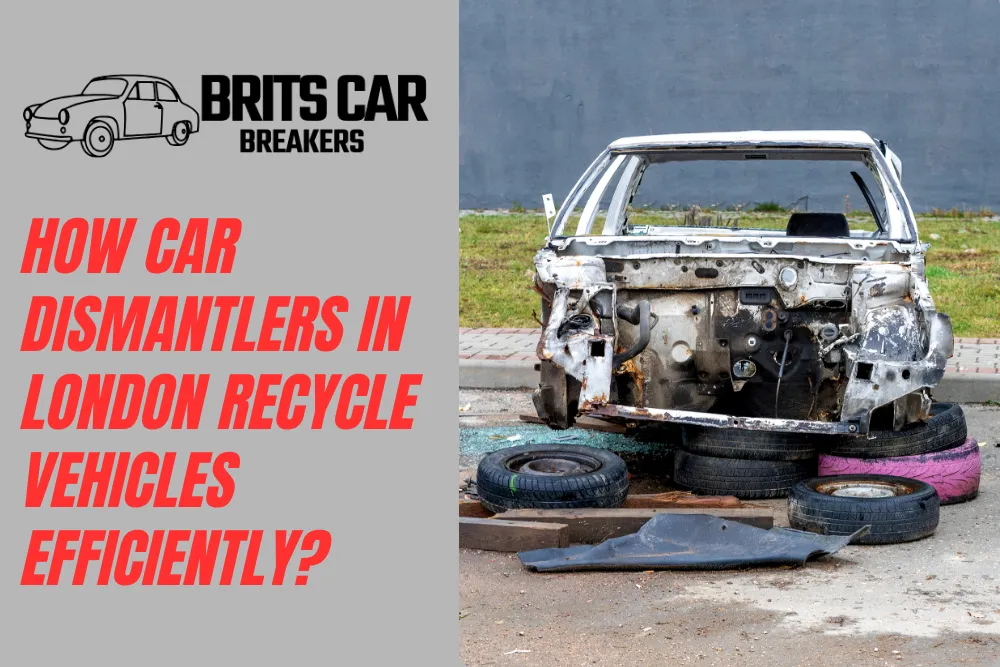
If you have an old motor sitting on a London street, it is more than just a hunk of rusty metal. It is a ticking environmental clock. With the ULEZ expansion and the sheer cost of keeping an older car on the road, thousands of Londoners are suddenly facing the end of the road for their vehicles. This is where car dismantlers in London come into play.
Scrap car removal businesses don’t just crush cars; they perform a high-stakes disassembly of machines made of thousands of different materials. If this process didn’t run perfectly, our city’s soil and water would be a toxic mess within a year. This matters because it turns a waste problem into a resource win, keeping the capital a bit greener and your wallet a bit heavier.
1. The Logistics of Scrap Car Removal in the Capital
Moving a dead car in London is a nightmare. You have narrow mews, red routes, and aggressive traffic wardens to deal with. Efficient dismantlers have turned this into a science. They use smaller, agile recovery trucks that can winch a car out of a tight basement parking lot or a crowded estate in Hackney without blocking the whole road.
When you book a scrap car removal, you are paying for that driver’s local knowledge as much as the truck itself. They coordinate their pickups to avoid the worst of the Congestion Charge zones, which helps them keep their offer prices competitive for the public.
2. The Legality at the Authorised Treatment Facility
Once the car hits the yard, the clock starts on the legal side. You cannot legally scrap a car at just any garage. It must be a licensed Authorised Treatment Facility.
The dismantler checks your ID and the V5C logbook to make sure the car isn’t stolen or under finance. In a city where car crime is a constant headline, this step protects you. If they don’t ask for your ID, walk away; they aren’t a legal outfit.
3. Depollution
Depollution is the grittiest part of the vehicle recycling process. A car is a cocktail of fluids that hate the environment.
- The Sucking Rigs: Technicians use specialised vacuum lines to pull out the black engine oil, the thick red transmission fluid, and the bright green coolant.
- The AC Gas: They use a recovery unit to suck out the refrigerant gas so it doesn’t leak into the London sky.
- The Fuel: Even the last half-litre of petrol is drained via a puncture tool in the tank. Once the car is dry, it is no longer considered hazardous waste. This is the single most significant win for the environmental impact of car scrapping.
4. The Pick and Pull for Car Parts Reuse
Before the car meets the shredder, the gold mining begins. Modern London dismantlers have a sharp eye for what’s still worth money. They strip off the “good bits” that can be resold.
- The High-Value Parts: They pull out the alternators, starter motors, and infotainment screens.
- The Body Bits: A clean door or a wing mirror from a popular model like a Ford Fiesta or a VW Golf is worth much more as a part than as scrap metal. This car parts reuse keeps other Londoners on the road more cheaply and reduces the need to ship brand-new parts across the ocean.
5. The Big Crunch and Metal Sorting
Scrap cars are sent to massive industrial shredders—usually located near the Thames or just outside the M25- that can chew a car into fist-sized chunks in about 20 seconds.
- The Magnet Trick: A giant magnetic drum pulls out all the ferrous metals.
- The Eddy Current: This clever bit of physics uses a reverse magnetic field to pull out non-ferrous metals like aluminium and copper. Because scrap metal prices change every single day based on global demand, these yards have to be incredibly fast at sorting these metals to get the best return.
6. Closing the Loop with the Certificate of Destruction
A professional London dismantler will log into the government portal and issue your Certificate of Destruction.
- Your Shield: This document is your legal proof that you are no longer responsible for the car.
- The Risk: If you don’t get this, you might still get hit with tax reminders or fines if the car’s plates are cloned.
The Final Word
Scrapping a car in London is a massive industrial effort hidden behind a pair of gates. It takes a dead machine and turns it into the raw materials for the next generation of skyscrapers and EVs. It is a tough, oily, and highly technical business that keeps our city clean.
If you want the job done without any legal headaches, the team at Brits Car Breakers knows the London streets and the recycling laws inside out. They handle the mess so you can get on with your day, knowing your old motor was dealt with properly.