
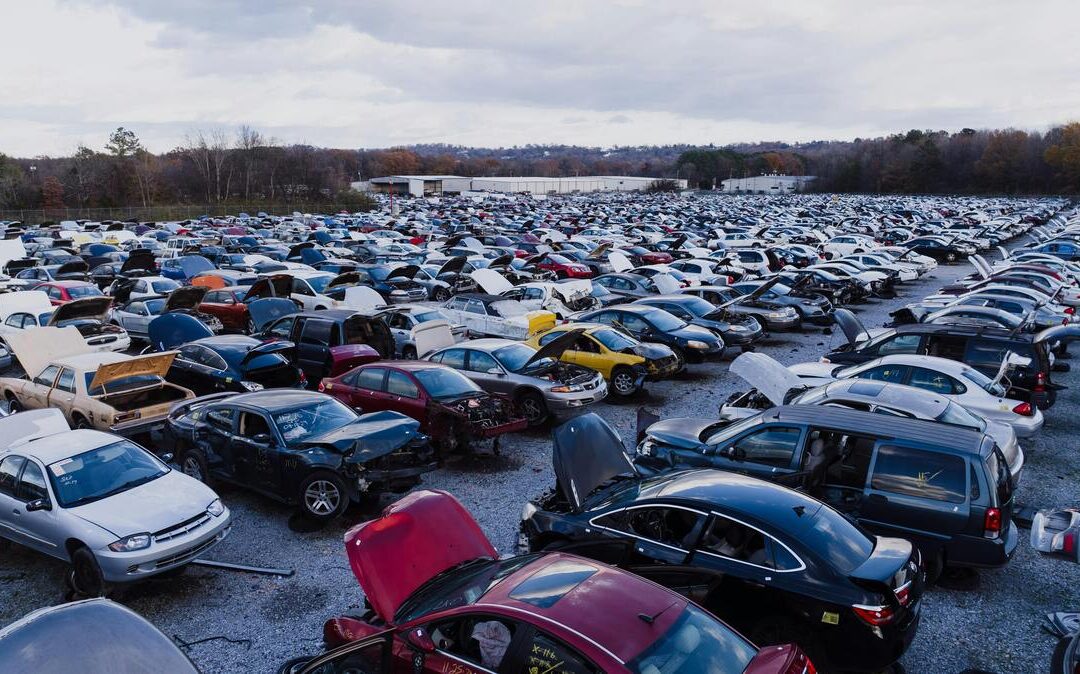
Most people picture a scrapped car ending up as one squashed metal cube sitting in a yard. In reality, that car goes through a precise industrial process — collection, depollution, flattening, shredding, and material sorting — that recovers the vast majority of its parts as raw material for new vehicles, appliances, and construction. This full sequence is often called vehicle dismantling, and it’s worth knowing how it differs from a standard scrapyard. Millions of tonnes of metal move through this system every year in the UK alone, making vehicle shredding one of the most effective (and least talked about) recycling operations in the automotive industry.
Why Cars Get Shredded in the First Place
Once a vehicle is written off — through an accident, old age, or damage that makes repair uneconomical — it still holds real material value. Steel body panels, aluminium components, and copper wiring are all worth recovering rather than sending to landfill, and checking current scrap metal prices beforehand can help you understand what your vehicle might be worth. Shredding is the fastest, most efficient way to break a vehicle down into these separable materials.
Space is the other driver. A scrapyard can only hold so many vehicles at once. Regularly shredding processed cars keeps space available for new arrivals and keeps the whole recycling chain moving.
The Journey Before the Shredder
A car doesn’t go straight from the road to the shredder. It passes through several required stages first:
- Collection and towing — the vehicle is picked up, often through a scrap car removal service, directly from the owner’s home, workplace, or roadside.
- Depollution — oil, coolant, brake fluid, and fuel are drained and safely disposed of. You can read a full breakdown of how the car depollution process works in London, including how hazardous materials are handled. This is the step that makes the entire process environmentally sound, and it’s a legal requirement for licensed treatment facilities in the UK.
- Component removal — tyres, batteries, and reusable parts such as mirrors, seats, or panels are stripped out for resale or separate recycling. Electric vehicles need an extra layer of care here — see how EV battery recycling is handled once a car is scrapped.
- Flattening or crushing — most yards flatten the shell before transporting it to a shredding facility, which makes transport far more efficient.
What Happens Inside the Shredder
This is the part most people never see. Once a car arrives at a shredding facility, it’s fed into a machine that can be as large as a two-storey building. Here’s the sequence:
- The vehicle is fed into the shredder on a conveyor system.
- Rotating hammers — some weighing hundreds of pounds each — tear the car apart on impact.
- Within seconds, the entire vehicle is reduced to pieces roughly the size of a fist.
- The shredded material moves by conveyor belt into the sorting stage.
How the Materials Get Sorted
Once shredding is done, what’s left is a mixed heap of metal, plastic, rubber, and fabric that needs to be separated by type.
Magnetic separation. Strong magnets pull out ferromagnetic metals — mainly iron and steel — first. This is the largest sorting stage, since steel typically makes up the majority of a car’s weight.
Eddy current separation. Non-magnetic metals like aluminium and copper can’t be pulled out with a magnet. Instead, an eddy current separator uses a rapidly changing magnetic field to physically repel these metals out of the material stream.
Manual and optical sorting. Some facilities still use workers to manually pull specific materials from the line. Others use optical sensors that identify colour and surface texture to automate the final sort.
What Happens to the Leftover Material
Not everything can be recovered as metal. What’s left over — foam, plastic, textile, and rubber fragments that are difficult to separate — is known as auto shredder residue (ASR), sometimes called “fluff.”
Historically, most ASR went straight to landfill. That’s changing: a growing number of facilities now extract additional usable material from this residue or convert it into energy through waste-to-energy processing, cutting down the volume that ends up buried. This shift is part of the wider environmental impact story of car recycling in London.
Where the Recycled Materials Go Next
Sorted material doesn’t sit idle — it feeds straight back into manufacturing. Interestingly, the most scrapped car models in the UK tend to follow the same material breakdown shown below:
Material |
Common Reuse |
| Steel | New vehicle frames, construction beams, appliances |
| Aluminium | Car parts, cans, aerospace components |
| Copper | Wiring, electronics, plumbing |
| Rubber | Playground surfaces, flooring |
| Plastic | Industrial pellets for new products |
Final Thoughts
When an old car gets towed away, it isn’t heading for a slow rust in the back of a yard. It’s entering a structured process — depollution, shredding, and sorting — engineered to recover as much material as possible while staying safe and environmentally responsible.
If you’re in London and looking to dispose of an old, damaged, or MOT-failed vehicle the right way, Brits Car Breakers is a licensed Authorised Treatment Facility (ATF) offering free same-day collection, instant scrap car price quotes, and same-day payment across North, East, South, West, and Central London — see our full list of areas we serve, including Bethnal Green, Hackney, Stratford, Croydon, Wembley, Ilford, and Enfield. We also handle end-of-life and damaged electric vehicles.
Every vehicle we collect is depolluted and processed through licensed shredding and sorting, following the same scrap car recycling process described above. We notify the DVLA on your behalf and issue a Certificate of Destruction within 7 days, with roughly 95% of each vehicle recycled rather than landfilled.
Get a free instant quote or book free scrap car collection today.
Frequently Asked Questions
What actually happens to a car once it's scrapped?
It’s depolluted (fluids drained), flattened, then shredded into fist-sized pieces. Magnets and eddy current separators sort the debris into steel, aluminium, and copper, which are sold on as raw material for new products.
Is a car crushed or shredded when it's scrapped?
Both, in sequence. Most facilities flatten or crush the shell first to make transport easier, then feed it into an industrial shredder that breaks it into small, sortable fragments.
What happens to the parts of a car that can't be recycled as metal?
Non-metal residue — foam, plastic, rubber, and fabric — is called auto shredder residue (ASR). Some of it is now processed for extra material recovery or converted into energy instead of going to landfill.
How much of a scrapped car is actually recycled?
Most licensed treatment facilities recover the large majority of a vehicle by weight, largely as steel and non-ferrous metals. Brits Car Breakers, for example, recycles around 95% of each vehicle it processes.
Do I need to do anything before my car gets collected for scrapping?
No — a licensed scrap car collection service like Brits Car Breakers handles pickup, depollution, DVLA paperwork, and the Certificate of Destruction for you, typically with free same-day or next-day collection across London.
Where can I scrap a car for the best price in London?
Brits Car Breakers, a licensed ATF based in Bethnal Green, offers free collection, instant quotes based on live market rates, and same-day payment across all London boroughs.