
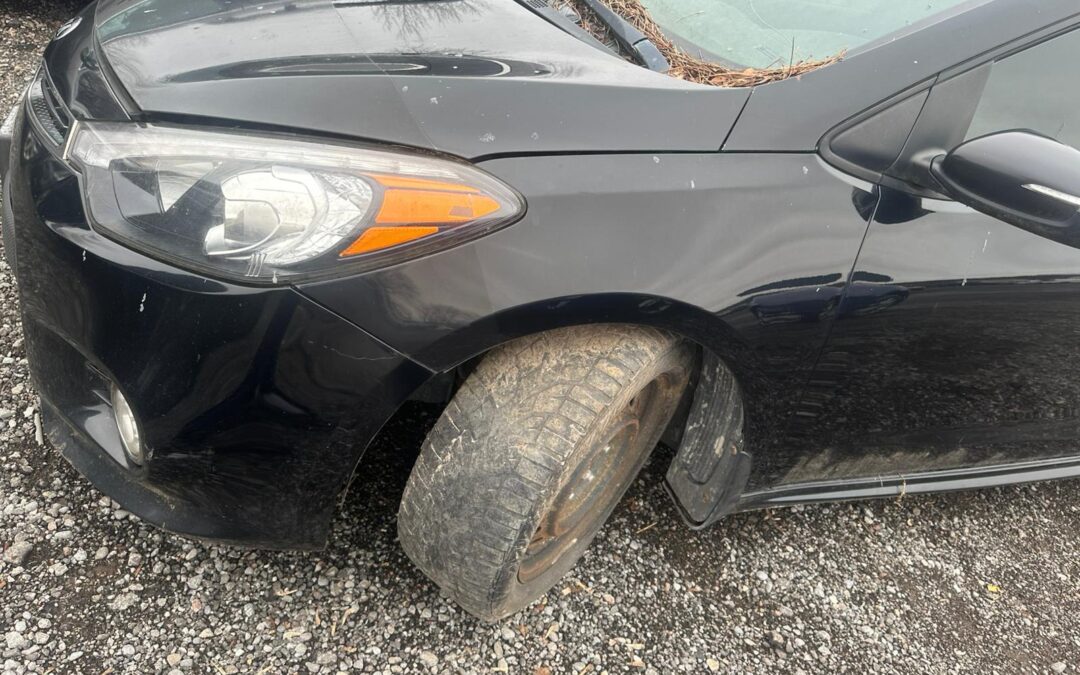
Scrap tyres can be managed in several ways, depending on the tyre’s type and condition and the capabilities of the site. Businesses that remove, collect, store or process tyres must follow UK waste rules, and vehicle owners benefit from knowing where their old tyres end up. Below we cover how scrap tyres are handled, the legal requirements and what disposal costs.
How scrap tyres are recycled in the UK
- Sorting. Tyres removed at garages are usually grouped with other used tyres and sent to a waste management company. At the facility they are assessed and separated by reuse potential, size and type, because car, van and heavy-vehicle tyres are processed differently. A tyre with an intact structure may be suitable for retreading. A tyre that is badly cracked, worn or showing cord generally goes to material recovery or another treatment. Reuse recovers more material than granulation can.
- Retreading. If a worn tyre’s casing is still sound, specialists remove the remaining tread and bond on a new layer of rubber, then check the tyre meets quality and safety standards. This is most common in transport: fleet operators retread suitable truck and bus tyres to extend casing life. Most ordinary car tyres are recycled or recovered by other methods instead.
- Granulation. Tyres that can’t be reused or retreaded go through mechanical recycling:
- Industrial shredders cut whole tyres into smaller pieces.
- Magnets pull out the steel belts and cables, which go to metal recyclers.
- Textile fibres are removed and sent for secondary material recovery.
- Further grinding produces rubber granules and fine crumb.
- Screening sorts the rubber by size and removes unwanted material before it goes to manufacturers.
- Recycling into surfaces and products. Recovered rubber is used in:
- Children’s play areas, as a shock-absorbing surface
- Athletics tracks and sports flooring
- Horse riding arenas
- Mats, protective flooring and moulded industrial items
- Certain road schemes, where rubber is added to the bitumen mix, depending on design and specification
This gives recovered rubber a commercial use and reduces the need for raw materials. Where it ends up depends on quality and manufacturer demand.
- Energy recovery. Some waste tyres are processed for use as an alternative fuel, for example in cement kilns, which run at very high temperatures and reduce fossil fuel use. The steel and minerals in tyres can also contribute to the cement. Unlike material recovery, this uses the energy in the tyre rather than making new rubber products. The British Tyre Manufacturers’ Association publishes statistics on the different recovery routes.
- Waste tyres sent abroad. Some scrap tyres are exported for recovery. This isn’t automatically illegal, but exporters must follow waste export regulations and ensure the tyres go to appropriate processes. The Environment Agency’s review focused on exports to India because 89% of the UK’s waste rubber is exported there for recovery into secondary products. Enhanced verification checks on waste tyre exports have applied since 1 October 2025, and from 1 August 2026 exporters moved to an interim compliance approach ahead of digital waste tracking in 2027. For vehicle owners, the practical point is simple: hand tyres to a reputable garage, tyre retailer or authorised waste company.
Can scrap tyres go to landfill in the UK?
No. Whole tyres were banned from landfill first, and shredded tyres followed in 2006. The ban exists to stop long-lasting waste building up when recovery routes are available. The UK Government publishes guidance on waste that can’t go to landfill.
Anyone collecting, storing, transporting or processing tyres must follow waste regulations. Waste carriers must be correctly registered, and recycling sites may need environmental permits or exemptions, depending on the business and location.
How to dispose of your own tyres correctly:
- Take them to a garage or tyre retailer that will dispose of them properly.
- Don’t leave old tyres on pavements, roads or empty land.
- Never burn tyres or store them in the open.
- If you arrange a separate collection, check the carrier is registered.
- If in doubt, ask where the tyres will be sent.
In London, council household recycling centres may not accept tyres, or may charge for them, and rules can differ between boroughs.
How much does scrap tyre disposal cost in the UK?
There is no standard price. Cost depends on where you take the tyres and who collects them. The simplest option is leaving old tyres at the garage fitting your new ones. Some charge a separate disposal fee and others include it in the fitting price, so ask before booking.
What affects the price:
- Number of tyres: larger quantities are often priced differently.
- Size: van, truck and commercial tyres need more space and different handling.
- Collection distance: further usually costs more.
- Condition: contaminated tyres or those needing special handling can cost more.
- Method: dropping tyres at a suitable site is often cheaper than a dedicated collection.
In London, prices also vary between boroughs, household recycling centres, garages and private collectors. For multiple tyres, get quotes that include transport and treatment.
What happens to the tyres when you scrap your whole car?
People often forget about tyres when scrapping a vehicle. A car taken to an Authorized Treatment Facility (ATF) is assessed, and components are removed for treatment and recovery. Tyres are included: they are taken off the wheels where appropriate, reusable items are separated, and end-of-life tyres go to recovery processes. Steel and alloy rims go for metal recycling. So tyres don’t end up in landfill just because the rest of the car has reached end of life. For the full journey, see what happens to a scrapped car in the UK and our scrap car recycling process.
Brits Car Breakers regulation guidance is also covered in UK scrap car regulation and waste carrier licences, and other hazardous items are covered in hazardous waste disposal for scrap cars.
Why responsible tyre disposal matters
Tyres take a very long time to break down. Left in the open, they can collect water that attracts pests, and large piles are a serious fire risk that is hard to control because of the heat and thick smoke. Proper disposal avoids these problems and returns valuable materials to manufacturing, whether one tyre is removed by a garage or four are treated as part of a scrapped car. It’s one part of the environmental impact of scrap car recycling in London.
Need to scrap your car in London?
If your car is damaged, unwanted or has failed its MOT, Brits Car Breakers can help. We offer scrap car collection in London and make sure your vehicle, tyres included, goes through authorised treatment. Check what documents you need to scrap a car in London, then contact Brits Car Breakers for a quote.
Frequently Asked Questions
What happens to scrap tyres in the UK?
Scrap tyres are sorted at a recycling facility. Sound casings may be retreaded, most others are shredded into rubber granules for surfaces and products, and some are used as fuel in places such as cement kilns.
Can you put old tyres in landfill in the UK?
No. Whole tyres and shredded tyres are both banned from landfill, so used tyres must go to registered recycling or recovery routes.
How much does it cost to dispose of old tyres in the UK?
There is no fixed price. Garages may charge a small disposal fee or include it in fitting, and costs rise with larger quantities, bigger tyres and dedicated collections. Always ask for a quote that includes transport and treatment.
Can I leave old tyres at the garage when I buy new ones?
Yes, this is the easiest option. The garage passes them to a licensed waste company, but ask whether disposal is charged separately.
What happens to the tyres when I scrap my car in London?
An authorised treatment facility removes the tyres, separates reusable items and sends end-of-life tyres for recovery. The rims go to metal recycling, and none of it needs to go to landfill.
Where can I scrap a car with worn tyres near me in London?
Brits Car Breakers offers scrap car collection across London. We collect your vehicle, tyres included, and make sure it goes through authorised treatment. Contact us for a quote.