
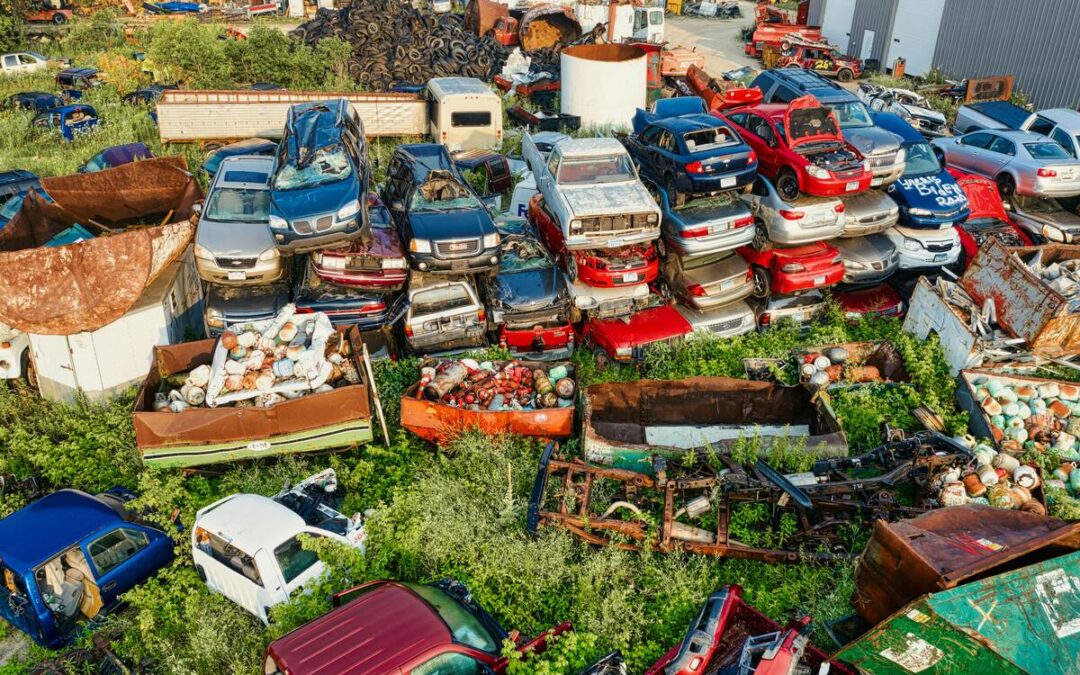
Saying goodbye to a trusted vehicle is a major decision for any car owner. When a vehicle becomes too expensive to maintain, repeatedly fails its MOT, or no longer complies with London tightening ULEZ standards, keeping it on the road hurts your pocketbook. Before sending your vehicle to a professional Tower Hamlets car dismantler, it is helpful to know where your vehicle actually goes.
Many owners assume that once the recovery truck leaves, the vehicle simply gets crushed into a metal cube and forgotten. The real journey is a highly regulated recycling process. Modern auto recycling relies on advanced engineering to give old parts a completely new life.
According to data published by the European Circular Economy Stakeholder Platform, recycling steel saves up to 72% of the energy needed for primary production while cutting carbon emissions significantly.
Understanding this process gives you total peace of mind that your end-of-life assets are handled responsibly. Let us look at the exact journey your vehicle takes after entering an industrial recycling facility.
1. The Legal Intake and DVLA De-Registration
The moment a vehicle arrives at a salvage yard, whether transported from Bethnal Green or Poplar, the team prioritizes legal compliance over mechanical work. A scrap car cannot be broken down without official government clearance. The yard staff immediately cross-references the vehicle identification number with the DVLA database to confirm true ownership.
-
Logbook Inspection: The dismantler checks your V5C logbook to ensure all vehicle details match the physical chassis.
-
Official Certification: As a fully licensed Authorized Treatment Facility UK operator, the yard logs the intake electronically with the government. You receive an official Certificate of Destruction within twenty-four hours, completely releasing you from future road tax and legal liabilities.
-
Traceable Payments: Under the Scrap Metal Dealers Act, no legal business can give you physical cash for your vehicle. The yard completes the intake by issuing a traceable bank transfer directly to your account, ensuring a clean audit trail.
2. Draining Toxins via the Vehicle Depollution Process
Once the legal paperwork clears, the car moves to a specialized bay with impermeable flooring. An undepolluted vehicle contains hazardous waste that can ruin local soil and city water systems. Technicians use commercial suction lines to isolate and extract every fluid from the mechanical systems.
-
Fuel Extraction: Pumping out all remaining petrol or diesel from the fuel tank.
-
Engine and Drive Fluids: Draining thick engine oil, transmission fluids, and hydraulic brake lines.
-
Climate and Cooling Systems: Vacuuming out air conditioning refrigerant gases to protect the atmosphere, followed by radiator coolant and windshield washer fluid.
3. Neutralizing Pyrotechnics and Removing Batteries
With the liquids gone, the vehicle is chemically stable but physically active. Modern vehicles contain hidden electrical and explosive components that require safe handling before crushing.
Workers first disconnect and lift out the heavy lead-acid or hybrid battery pack. These components undergo separate processing because their heavy metal plates are highly valuable in the secondary manufacturing market.
Next, technicians focus on the active safety systems. They use electronic tools to safely deploy or neutralize unpopped airbags and seatbelt pre-tensioners. Leaving a live airbag inside a car during the crushing stage can cause dangerous explosions inside industrial machinery.
4. Harvesting Working Spare Parts for the Market
Only when the car is completely safe does mechanical dismantling begin. A professional yard looks at an old vehicle as a valuable source of working components rather than just junk metal.
A team of mechanics strips away high demand spare parts. They unbolt working alternators, starter motors, headlamps, and window regulators. If the engine and gearbox run smoothly, they are completely lifted out, cleaned, and tested for the global green parts market.
Selling these verified parts keeps other vehicles on the road across the United Kingdom without the massive energy costs of manufacturing brand new components.
5. Separating Non-Metal Materials
After harvesting the prime mechanical parts, the remaining shell still holds a variety of materials that require separate recycling streams.
-
Tire Recovery: Technicians pull the wheels off the axles and separate the rubber tires from the alloy or steel rims. This rubber is shredded into playground safety mats, running tracks, or rubberized asphalt for road building.
-
Glass Extraction: Windshields and side windows are carefully popped out of their frames. This laminated glass gets processed separately to separate the plastic safety film from the clean silica.
-
Interior Plastics: Dashboards, bumper covers, and door cards are unclipped. These large plastic assemblies are sorted by polymer type, granulated into tiny pellets, and sold to manufacturers to create new consumer goods.
6. Heavy Crushing and Metal Shredding
At this stage, the vehicle is nothing more than a hollow, bare metal shell. It is now ready for the most dramatic phase of the recycling journey.
The yard team uses a heavy hydraulic claw to drop the metal body into a baling press. This massive machine exerts tons of pressure to flatten the chassis into a dense, tight cube.
These heavy metal bales are then loaded onto trucks and transported to a high-capacity industrial shredding mill. The mill features massive, rotating steel hammers that tear the car bale into fist-sized chunks within seconds. Magnetic separators easily pull the ferrous steel away from the non-ferrous metals like aluminum, copper, and brass, leaving a clean stream of raw metal materials.
7. Back to the Furnace: Melting Metal into New Products
The final step closes the loop of the circular economy. The separated metal fragments go directly to industrial smelting furnaces across the country.
Melting down recycled steel scrap requires far less energy than producing brand new steel from raw iron ore. This massive energy reduction slashes industrial carbon emissions, making car recycling an essential part of modern green initiatives. The molten steel is poured into large casting moulds to create fresh steel beams, railway tracks, or sheet metal for the newest generation of vehicles.
Conclusion
When it is time to arrange a scrap car removal for your old vehicle, choosing the right team matters. You want a local service that guarantees free collection, manages the legal paperwork correctly, and pays a fair price via bank transfer. If you want to scrap a car in London, selecting a registered operator guarantees your vehicle follows this exact eco-friendly recycling journey.
Brits Car Breakers works directly with licensed treatment facilities to make sure your old car is recycled responsibly, safely, and entirely within the law. Turn your unwanted vehicle into a clean bank transfer while keeping our local environment clean.
Frequently Asked Questions
What does a Tower Hamlets Car Dismantler do with my scrap car?
A licensed Tower Hamlets Car Dismantler completely depollutes your vehicle by extracting hazardous fluids, harvesting functional spare parts, and recycling the remaining metal shell. This process ensures that up to 95% of the vehicle is repurposed or recycled, minimizing environmental impact.
How much can I get for scrapping my car in Tower Hamlets?
Scrap values depend heavily on the vehicle’s weight, model, and the current global demand for steel. To find out the exact value of your vehicle today, you can check live scrap car prices in London online for an instant, competitive estimate.
Do you collect non-running vehicles or MOT failures in Tower Hamlets?
Yes, we specialize in recovering vehicles in any condition. We offer free recovery services and will safely transport your non-running asset directly to an authorized treatment facility.
Do you cover all areas in and around Tower Hamlets?
Absolutely. We serve the entirety of East London, offering free collection across various areas. Check our comprehensive list of areas we serve to confirm coverage for your specific neighborhood.