
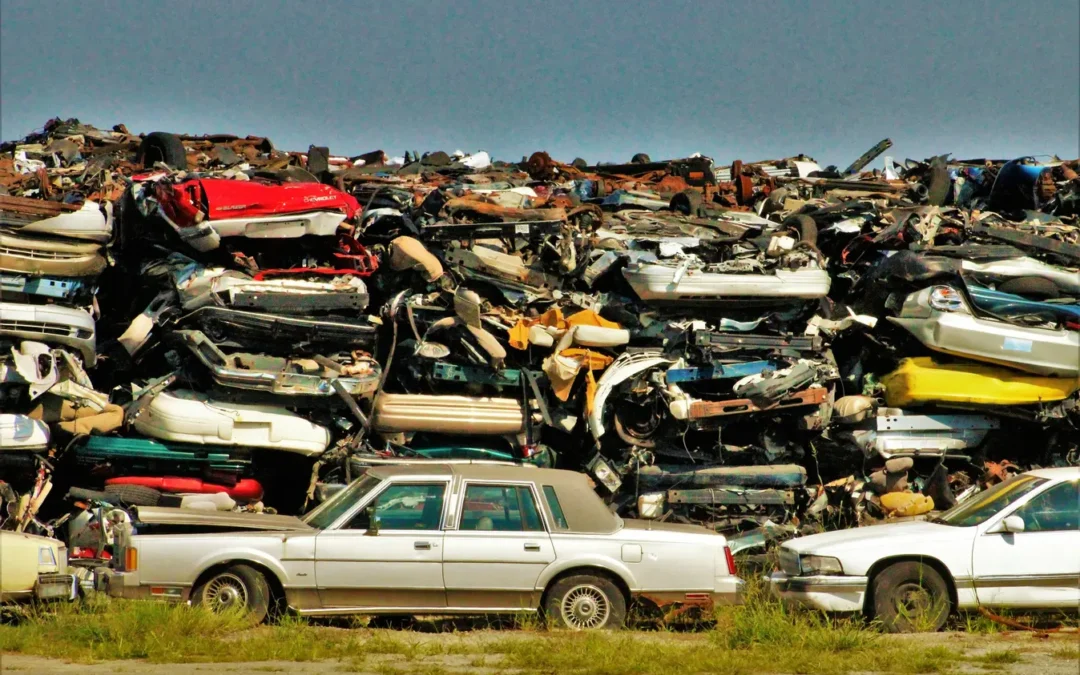
Quick answer: If your second car goes unused for weeks, faces an expensive MOT or repair, and your main car covers your daily needs, scrapping it usually costs less than keeping it. Book collection with a licensed authorised treatment facility (ATF), keep your Certificate of Destruction, and make sure DVLA is told the car has been scrapped.
Why Do Harrow Families Clear Their Second Car?
A second car is useful when both parents commute, the children need regular lifts, or you want a backup for emergencies. When one car covers everything, the other tends to sit idle.
Signs it’s time to let it go:
- It hasn’t moved for weeks at a stretch
- The MOT is due and it needs work
- You’re paying insurance and tax for a car you rarely drive
- The battery keeps going flat
- Tyres and brakes need attention because it’s barely used
- Your driveway or parking space could serve a better purpose
- Your other car already meets your daily needs
Parking can tip the decision. Harrow Council prices resident permits by vehicle emissions and adds a surcharge for each extra permit in a household. A permit also doesn’t guarantee a space. Charges differ between zones, so check Harrow Council’s resident parking permit page for your street. If your second car is the extra permit, removing it can cut that cost.
Should You Keep or Scrap Your Second Car?
Not every older car belongs at a breaker’s yard. Start by checking how your family actually uses it.
Situation |
What may make sense |
| You use it every week | Keep it, if running costs stay reasonable |
| You use it only a few times a year | Compare annual costs against actual use |
| It needs major repairs | Get a repair estimate before spending more |
| It has failed its MOT badly | Compare repair costs with the car’s value (see repair or scrap after an MOT failure) |
| It has sat unused for months | Ask whether keeping it still makes sense |
| It has little resale value | Look into responsible disposal |
Look at the total annual cost, not just the car’s value. Add up insurance, vehicle tax, MOT, servicing, tyres, parking and battery replacements. A car that looks cheap to own can be expensive when it’s rarely driven.
What Should You Do Before Arranging Collection?
- Empty the car. Check the glovebox, boot, door pockets, centre console and under the seats. Family cars often hide documents, tools, sunglasses and shopping bags.
- Remove personal items and permits, including any Harrow parking permit.
- Sort out any private number plate you want to keep. You must apply to take the registration number off the vehicle before it is scrapped. Our guide on keeping your private number plate before scrapping explains how.
- Find your V5C logbook. GOV.UK says to give the V5C to the ATF but keep the yellow “sell, transfer or part-exchange your vehicle to the motor trade” section. If you can’t find it, read can I scrap my car without a V5C? or ask our team.
How Does Scrap Car Collection Work in Harrow?
With Brits Car Breakers, it takes five steps:
- Request a free quote. Give us your registration number and basic details.
- Accept the offer. We agree a collection date and time with you.
- We collect the car for free. Our recovery team comes to your home, driveway, street or workplace. In many cases, same-day or next-day collection is available, depending on availability and location.
- The car is recycled responsibly. It goes to a licensed authorised treatment facility for dismantling and processing.
- DVLA notification is handled. We help make sure the disposal paperwork is completed correctly.
GOV.UK says end-of-life vehicles must be scrapped at an ATF, and it’s illegal to scrap them anywhere else. The ATF decides whether the car is fully scrapped or can be repaired and resold. If it’s fully scrapped, you’ll be given a Certificate of Destruction within seven days. By law, payment for a fully scrapped car in England must be by bank transfer or cheque, not cash. Our Certificate of Destruction guide explains what it means.
What Paperwork Do You Need to Scrap a Family Car?
It can get confusing when one person drives the car and another pays the bills. The registered keeper is the person responsible to DVLA.
- Tell DVLA you’ve taken the car to an ATF. You can be fined £1,000 if you don’t. See our DVLA notification guide.
- Keep your Certificate of Destruction. Without it, you could still be liable for traffic penalties and vehicle tax.
- Check for a tax refund. Once DVLA has been told, any full months of vehicle tax remaining are normally refunded automatically. Part-months aren’t refunded. Our car tax refund guide has the details.
What If the Car Has Been Sitting on the Drive?
GOV.UK treats a car on a drive, in a garage or on private land as “off the road”. If it isn’t taxed or insured, you must make a Statutory Off Road Notification (SORN), or you’ll automatically be fined £80. The SORN cancels automatically when the car is scrapped.
A SORN car can only be driven on a public road to or from a pre-booked MOT or testing appointment. So for a car that has been parked up for months, collection is usually the practical route.
What Happens to the Car After Collection?
An old car is more than scrap metal. It contains steel and other metals, glass, tyres, batteries, plastics, fluids and reusable parts. At an authorised treatment facility, fluids, batteries and other hazardous materials are removed safely (depollution) before recyclable materials are recovered. Reusable parts are separated first. Read more in our depollution guide.
When Does Removing a Second Car Make Financial Sense?
There’s no set age at which a second car should go. The better question is whether it still earns its space and money.
Picture an older hatchback driven once or twice a month. It still costs you insurance, servicing, tax and parking, and the next MOT could bring a large repair bill. If your main car already does everything the family needs, the second car has lost its purpose. Removing it frees your driveway and ends a recurring cost. If you own several cars, our guide on which car to scrap first can help.
Your checklist:
- Confirm nobody in the family still needs the car
- Check its condition and MOT status
- Remove personal items and permits
- Sort out any private number plate
- Find the V5C
- Check whether you need a SORN
- Book collection with a licensed recycler
- Keep the Certificate of Destruction and all documents
Where We Collect in Harrow
Brits Car Breakers collects across Harrow and North West London (HA1, HA2 and HA3), including Harrow Town Centre, Wealdstone, North Harrow, South Harrow, Rayners Lane, Pinner, Kenton, Harrow Weald, Stanmore and Hatch End. We take cars that run and cars that don’t, including MOT failures and accident-damaged vehicles.
Conclusion
Clearing a spare family car you no longer use simplifies life. You reclaim parking space, stop paying to maintain a car that sits idle, and avoid MOT and repair bills. Just make sure the DVLA paperwork is done and the car goes through a licensed facility. Ready to clear your second car? Get a free, no-obligation quote from Brits Car Breakers or call +44 7506 646552 (Mon–Sat, 8:00 AM–6:00 PM).
Frequently Asked Questions
Is it worth scrapping a second car in Harrow, or should I keep it?
It depends on how much the car is actually used. If it sits unused for weeks while insurance, vehicle tax, MOT and parking costs continue, or it needs costly repairs, scrapping it often makes more financial sense. If you use it weekly and running costs are reasonable, keeping it may be fine.
Does Brits Car Breakers offer free scrap car collection in Harrow?
Yes. Brits Car Breakers offers free scrap car collection across Harrow and surrounding North West London areas, including Wealdstone, Pinner and Kenton, covering HA1, HA2 and HA3. In many cases, same-day or next-day collection is available, depending on availability and location.
Is there a scrap car collection service near me in Harrow?
Yes. Brits Car Breakers collects from Harrow Town Centre, Wealdstone, North Harrow, South Harrow, Rayners Lane, Pinner, Kenton, Harrow Weald, Stanmore and Hatch End. Request a free quote with your registration number, and the team will arrange a collection time that suits you.
What paperwork do I need to scrap a family car?
Have your V5C logbook ready. GOV.UK says to give it to the authorised treatment facility but keep the yellow “sell, transfer or part-exchange your vehicle to the motor trade” section. Make sure DVLA is told the car has been taken to an ATF, and keep your Certificate of Destruction. If you cannot find the V5C, ask the Brits Car Breakers team what you need.
Can I scrap a car that has failed its MOT or won't start?
Yes. Brits Car Breakers collects non-runners, MOT failures and accident-damaged cars, so the car does not need to start or be roadworthy.
What happens to my car after collection?
Your car goes to an authorised treatment facility, where fluids, batteries and other hazardous materials are removed safely, reusable parts are recovered, and the remaining materials are recycled. If the car is fully scrapped, you receive a Certificate of Destruction.